
By Stacie Freeman, MSSW
Benin • Togo • Ghana | December 2025
Content Warning
This essay contains descriptions of slavery, sexual violence, and human suffering connected to the transatlantic slave trade. The history described here is disturbing. Avoiding it does not honor those who endured it.
If you could travel anywhere in the world to truly understand history—not just read about it—where would you go?
For me, in December, it was West Africa.
I often tell my students that education should not only be about information; it should be about transformation. On that front, West Africa delivered.
Day 1: Arrival in Benin
We arrived in Cotonou, Benin, just as the sun sank into the Atlantic. Dinner was on the beach—grilled fish, warm air, and the sound of waves that have carried both life and loss for centuries.
That evening, we met our guide, Isaac, who began introductions with a call-and-response: “ago?”—Are you listening? The reply: “amé.”—I am listening. You have my full attention. Rooted in the Twi/Akan language tradition most closely associated with Ghana, this exchange is used across West Africa to gather a group and signal readiness to listen.
It set the tone for the journey. From day one, West Africa had my full attention.
Day 2: The Black River, a Fon Village, Songhaï, and the King’s Palace
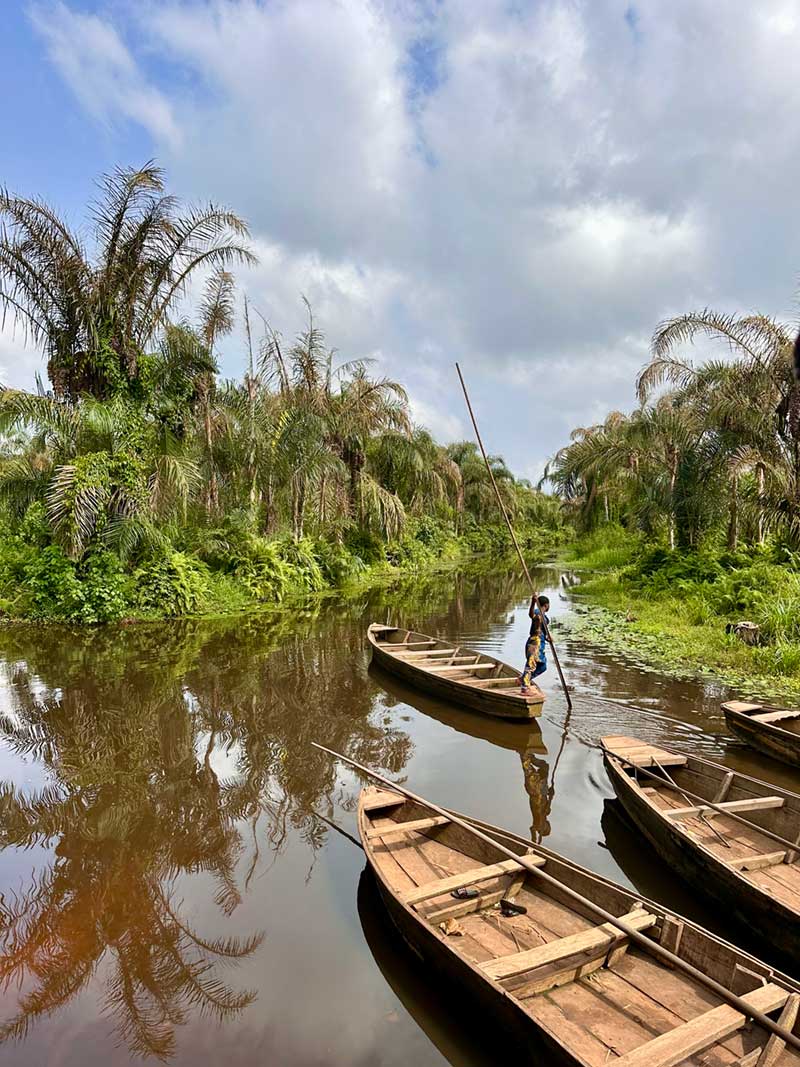
We began the morning on the Black River in a pirogue, a long wooden dugout canoe sitting low in the water. The riverbanks were thick with vegetation. Many of the plants, we learned, are used as medicine by local communities.
The river is protected not only for practical reasons, but spiritual ones.
Traditional African religions often involve ancestor veneration and animism, the belief that the natural world is alive with spiritual presence. Many people believe their ancestors live in the water. Fishing nets are considered disrespectful; fishing with a pole is acceptable. Nature here is not simply a resource. It is a relationship.
Our pirogue carried us to Adjarra, a rural Fon village. The Fon are a major West African ethnic group primarily residing in southern Benin and historically linked to the Kingdom of Dahomey. They are known for agricultural life, a rich oral tradition, and Vodun as a central spiritual system.
Children welcomed us with drumming and dancing, one wearing a Santa Claus mask. It was a perfect, jarring illustration of cultural leveling: the process by which cultures begin adopting similar, often Westernized, symbols and behaviors. It would not be the last time we saw it.
That day, we also visited a community hosting a twin naming ceremony.. Twins are highly revered in Fon culture. Babies are not named immediately; they remain inside for eight days, a sacred number associated with perfection and reincarnation. On the eighth day, the child is “outdoored” and introduced to the community.
Water is poured onto the roof and onto the baby in a first baptism. Silent prayers are spoken. Drops of water, followed by gin or honey, touch the baby’s tongue – happiness and hardship, sweetness and struggle. Life requires readiness for both.
Names are tied to the day of the week you are born. I was born on a Thursday: Yawa Stacie.
Later, we visited Songhaï Centre, a sustainable farming cooperative built on a zero-waste, integrated production system designed to raise living standards and fight underdevelopment. It was one of the most hopeful stops of the trip.
That afternoon, we traveled to Porto-Novo, Benin’s capital, and toured the palace of King Toffa I, now a museum. Toffa I is remembered for cooperating with French authorities and promoting Western education and religious tolerance. The palace contains the throne room, ceremonial courtyard, living quarters, and cultural artifacts.
Stories of royal life were both fascinating and disturbing. Historically, kings were said to have had hundreds of wives. Approaching the king followed strict ritual rules, and violations could be fatal. When a king died of natural causes, some wives were reportedly “put to sleep” to follow him into the afterlife.
The king was considered above ordinary humans. He did not “eat” – he “admired his plate.” He did not die – he “joined the ancestors” or “took a long journey.”
Outside the palace stood the Tree of Justice, where punishments ranged from servitude to death – or sale into slavery.
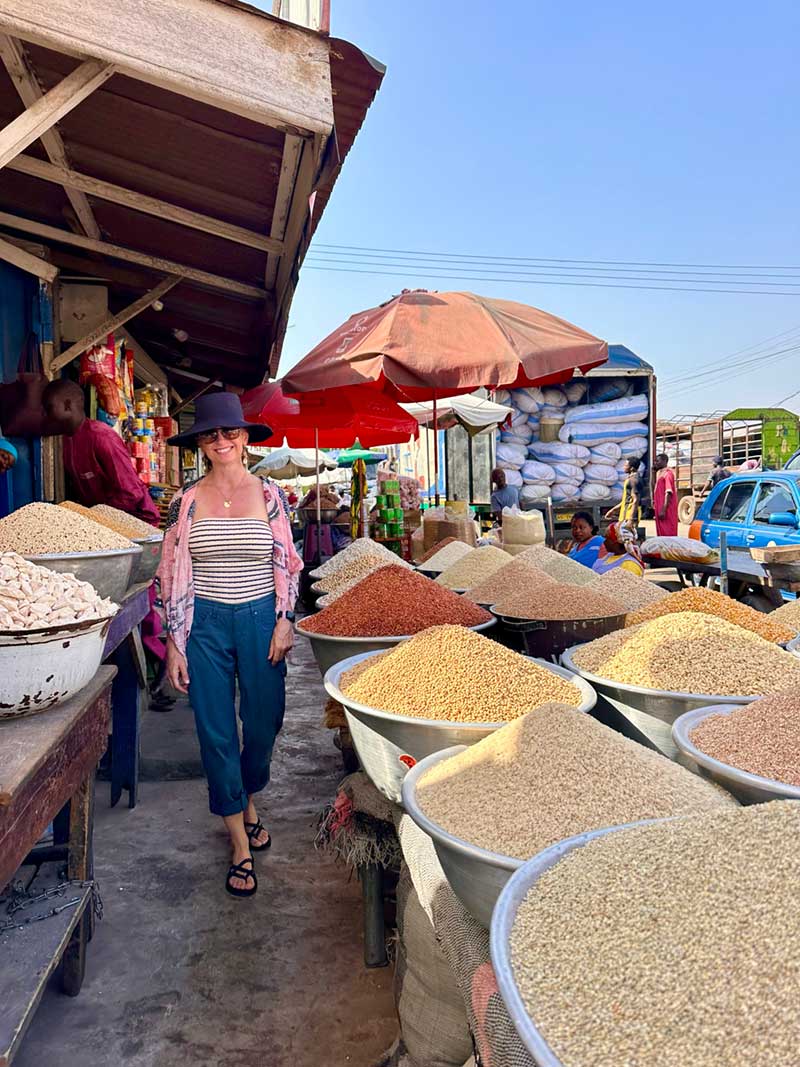
We ended the night back in Cotonou at the sprawling Dantokpa Market and the red-and-white Notre Dame Cathedral.
Day 3: Ganvié, Zangbeto, and Coca-Cola
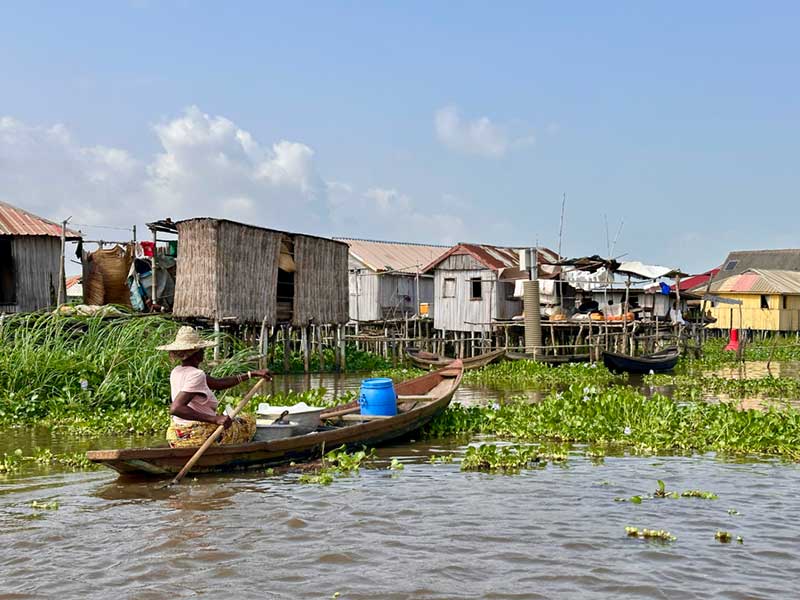
Day three took us to Ganvié, often called the “Venice of Africa.” In the 16th and 17th centuries, the Dahomey Kingdom captured people from neighboring groups and sold them into the transatlantic slave trade. The Tofinu people escaped because they believed Dahomey slavers thought their gods forbade capturing people who lived on water.
So the Tofinu built houses on stilts over Lake Nokoué. What began as survival became a thriving community. People have lived there for centuries. Their diet of fish and greens supports a physically active life – jumping between houses and boats, fishing, rowing, swimming. Resistance here took the form of ingenuity.
That evening, we arrived in Ouidah, the Vodun capital of Benin. Vodun is an ancient, nature-based religious tradition centered on ancestors, spirits, and balance – often misunderstood through colonial and pop-culture stereotypes.
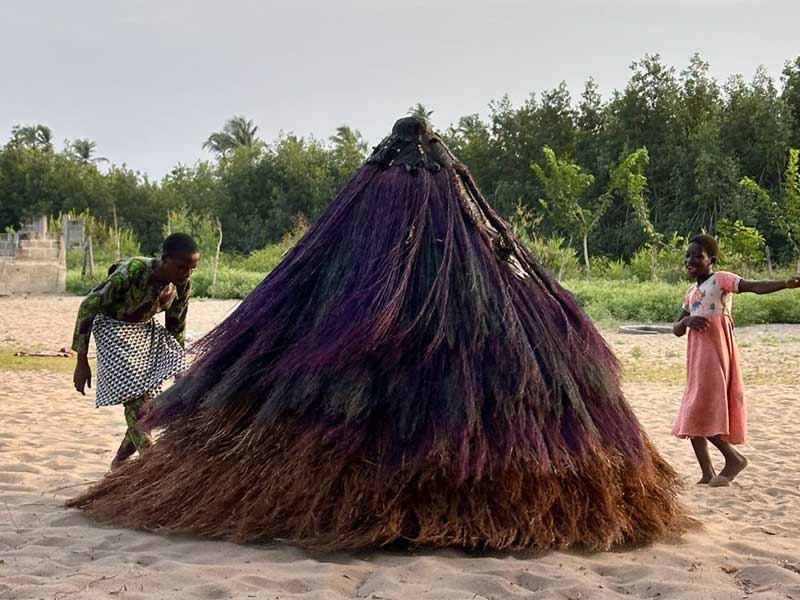
That night, we attended a Zangbeto ceremony. Zangbeto are guardians of the night, tasked with protecting the community and confronting wrongdoing. At the ceremony’s climax, the towering figure was lifted – revealing no human inside. Instead, Legba appeared: a powerful intermediary spirit who opens pathways between the human and spiritual worlds.
We left with symbolic gifts, including a kola nut. Native to West African forests, kola nuts were used in early Coca-Cola flavoring. The drink may have been invented in Atlanta, but one of its foundational ingredients traces back to West Africa.
Day 4: The Ouidah Route of the Slaves
This morning was heavy.
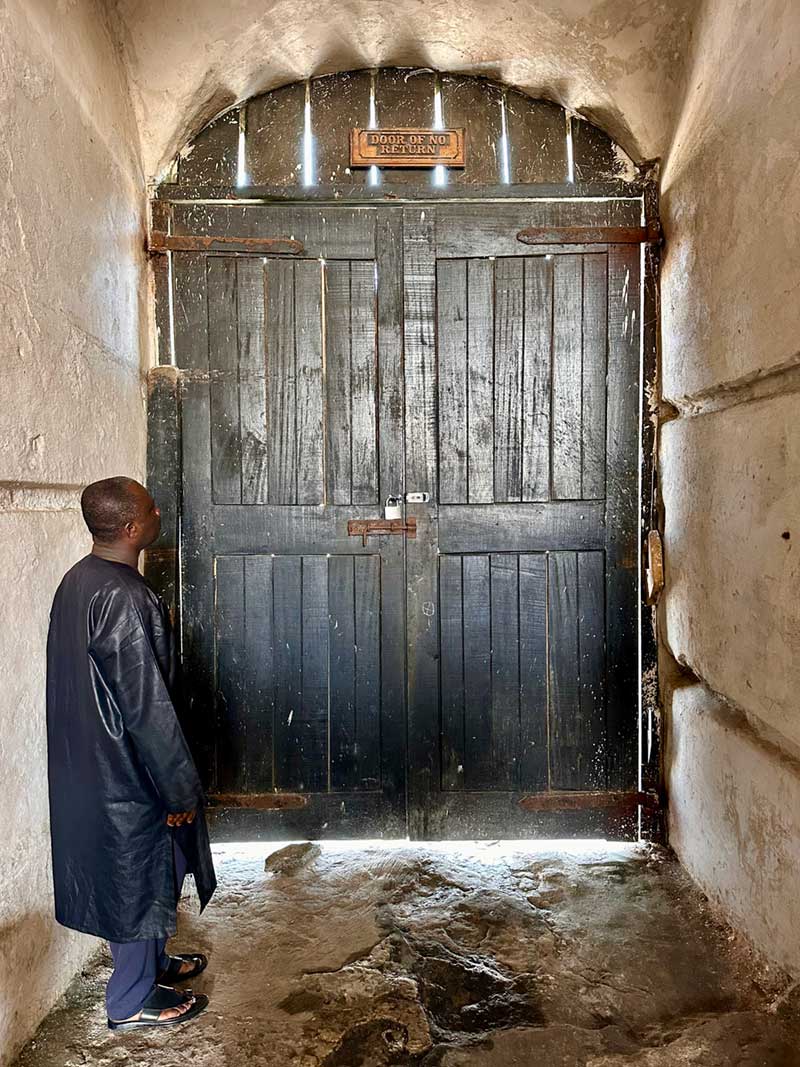
We walked the Ouidah Route of the Slaves, a four-kilometer path marking the final steps enslaved people took before forced departure across the Atlantic. Many captives walked hundreds of miles from the interior. Salt ponds nearby were used to heal wounds – not out of compassion, but to increase sale value.
The route includes the Slave Auction Plaza, the Tree of Oblivion, Zomaï House, mass graves, the Tree of Return, and finally the Door of No Return, marking where people were forced into small boats bound for slave ships.
On one ship we discussed, men were chained face down and women face up – making sexual assault easier.
Horrific.
That evening, we attended a Vodun ceremony rooted in healing, balance, and ancestral connection. After walking a path built on erasure, stepping into a living tradition that survived felt essential.
Days 5–7: Togo – Vodun, Women’s Power, and the Land
Crossing into Togo, we visited another Fon village where twins are revered. A Vodun potter gifted me clay symbols representing children after learning I am a twin mother. When Mike mentioned he was a twin father, the guide laughed: “No one cares.”
In Togoville, the Vodun capital of Togo, we learned that God is believed to hear women before men. At the Vodun tree – divided into male and female sides – women seeking fertility make offerings and return in gratitude.
In Lomé, we learned about the Nana-Benz: elite businesswomen who dominated the Dutch wax print trade and helped fund Togo’s independence. Wealthy and politically influential, they were also culturally fluent. One fabric design – “If you go out, I go out” – depicts a bird escaping a cage. Equality woven into cotton.
We hiked Mount Agou, met a village chief, shared gin, ate banku, and slept beneath mosquito nets in the mountains.
Days 8–10: Ghana – Green, Joyful, and Complex
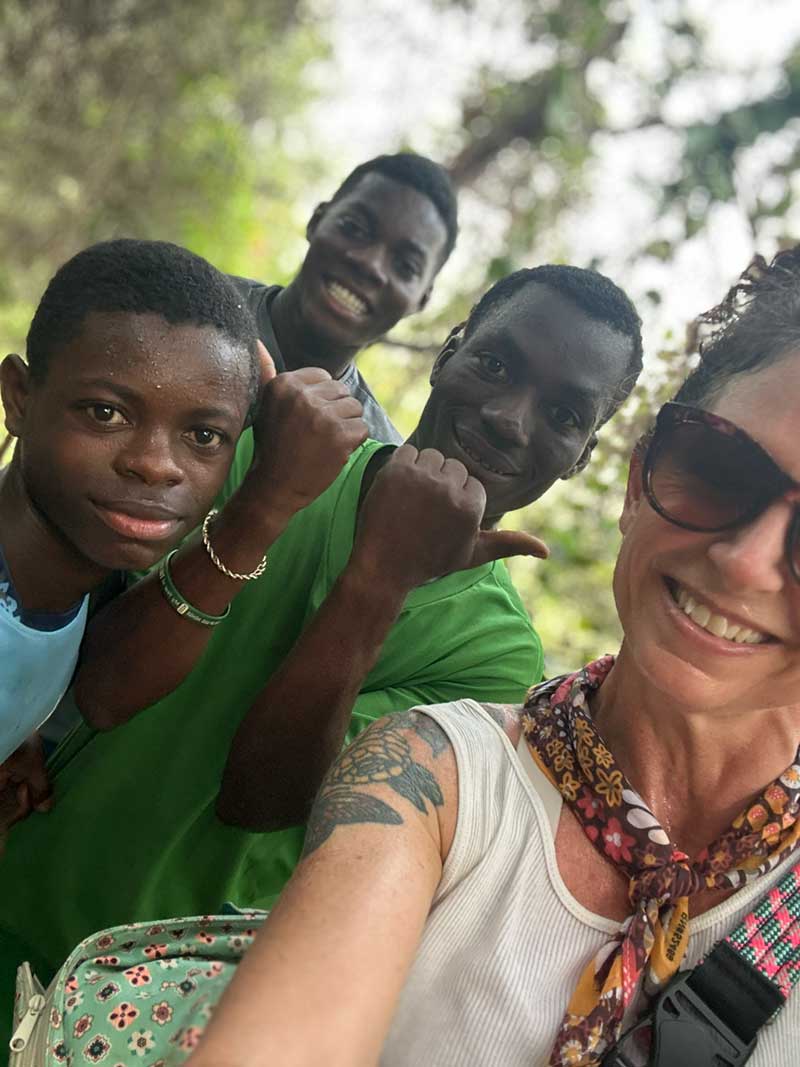
In Ghana’s Volta Region, we hiked lush landscapes, explored botanical traditions, wandered an abandoned colonial mansion in the jungle, and climbed Mount Afadja with local schoolchildren on a PE hike.
We swam beneath Wli Waterfalls, joined a funeral procession led by a goat, and learned about Ghana’s famous fantasy coffins – custom caskets shaped to reflect one’s profession or passion.
Funerals here are communal, expressive, and deeply social. Ghana blurred every boundary I thought I understood between grief and joy.
Days 11-13: Elmina and Cape Coast
These were the hardest days.
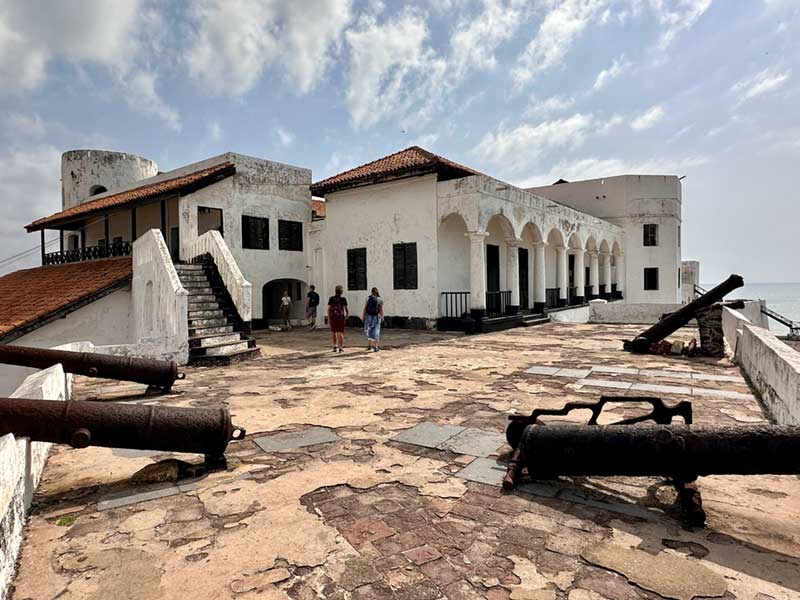
Elmina Castle and Cape Coast Castle are visually stunning – and horrifying. Built initially for gold trade, these fortresses became centers of human trafficking.
Standing in the dungeons of Cape Coast Castle, the floor beneath our feet – cobblestone layered with centuries of human waste, blood, sweat, and tears – made history physical. Above us sat airy governor’s quarters and a church. Luxury stacked directly on cruelty. It was overwhelming!
Why I Am Planning to Go Back
West Africa is not easy. It shouldn’t be. But it is essential.
While Benin and Togo may be too intense for first-time student travelers, Ghana is a powerful entry point for anyone ready to learn deeply about the world and their place in it.
That first call stayed with me:
Ago?
Amé.
West Africa asks for your attention. If you offer it, it teaches you in ways no classroom ever could.
I’m planning to return with a GCAC group in late 2027 or early 2028.
Ago?