


*Prices include airfare, lodging, ground transportation, meals, activity fees, and more.
*Any exceptions are clearly disclosed in the application.
Sample Itinerary forSan Ignacio, Nohoch Che’en Caves Branch Archaeological Reserve, Caye Caulker and Tikal National Park in Guatemala
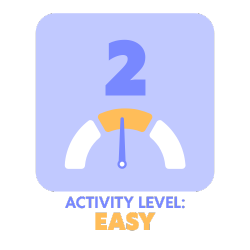
(click to see rating scale)
Day 1: Welcome to belize!
Upon arrival at Belize International Airport, your driver and trip leader will meet you for a scenic 2.5 to 3-hour drive west to San
Ignacio, located in the lush Cayo District. Enjoy the changing landscapes from coastal plains to rolling jungle-covered hills. Once in town, check in to your hotel and unwind after your journey. In the evening, you might explore San Ignacio’s
lively market area and town streets. The group will then head out to a welcome dinner in town for a first taste of Belizean flavors.
Day 2: Nohoch Che'en caves
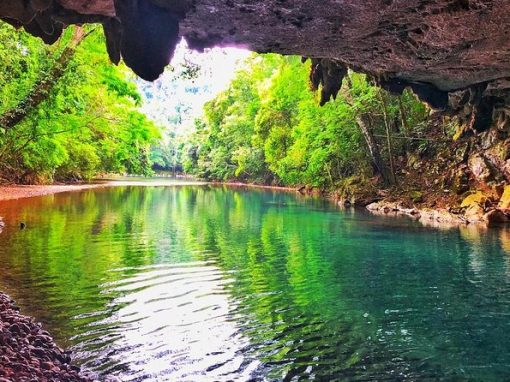
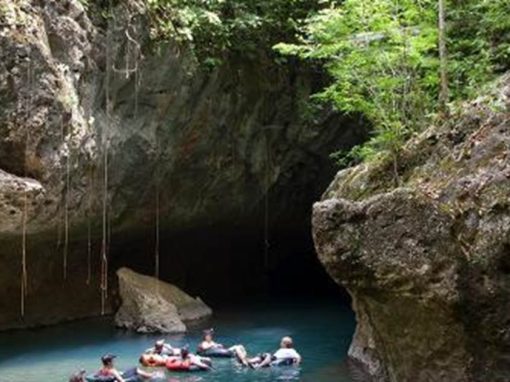
After breakfast, set out on an hour-long drive to the Nohoch Che’en Caves Branch Archaeological Reserve, where your cave tubing adventure begins. Take a short jungle hike before floating along the cool underground river through limestone caverns illuminated by your headlamp. Enjoy the serenity and mystery of this sacred Maya landscape before returning to San Ignacio in the afternoon to relax. Lunch will be held at the caving adventure center.
Day 3: Xunantunich Archaeological Site
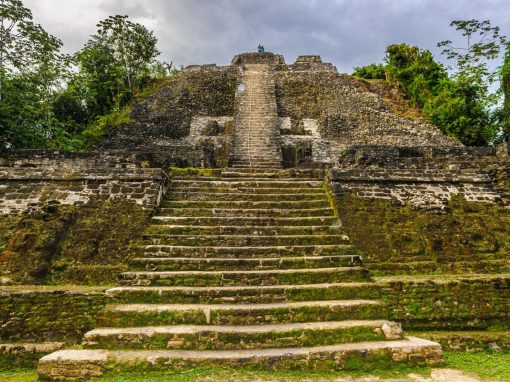
After breakfast, depart from your hotel in San Ignacio and head toward the Guatemala–Belize border, a drive of about 25 minutes. Before crossing, our group will stop at Xunantunich Archaeological Site, one of Belize’s most impressive Maya cities. Perched on a hilltop overlooking the Mopan River Valley, the site is dominated by El Castillo, a towering pyramid adorned with
intricate stucco friezes and offering sweeping views of the surrounding jungle. We will explore the site and enjoy lunch before crossing the border to Guatemala. A border fee of $20 must be paid per traveler. Once we are in Guatemala, our transportation will drive us for 2 hours approximately until reaching renowned Tikal National Park. The group will spend the evening in an
eco lodge inside basking in the sounds of the Mayan jungles.
Day 4: Tikal National Park
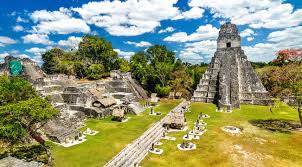
Wake up to the sounds of the jungle and prepare to explore Tikal
National Park, Guatemala’s most important archaeological site and a UNESCO World Heritage Site. Tikal is famous for its impressive temples and breathtaking natural scenery. Recent Lidar research has revealed astonishing insights into
the ingenuity and sophistication of the Maya civilization, deepening the story behind these majestic ruins. Hike along jungle trails, spot colorful birds and curious wildlife, and climb to the summit of the tallest temples for breathtaking panoramic views of the rainforest canopy. Stroll through the central plaza, explore hidden paths, and feel the scale of a civilization that thrived here over a thousand years ago. Midday, enjoy a relaxing lunch immersed in the jungle, surrounded by the sights and sounds of the vibrant ecosystem that has coexisted with these ancient monuments for centuries.
Day 5: Uaxactún & Mayan Ruins
Step into Uaxactún, a minor site 23 km away from Tikal where ancient Maya ruins coexist with a modern day village. Explore the different temples and structures, along with the relation to the Mayan calendar and astronomy. The group will also get an insight to the region’s deep-rooted conservation efforts, from sustainable forest management to the traditional practice of chicle (chewing gum) collection—a craft historically commercialized by companies like Wrigley, whose interventions brought economic opportunities but also complex power dynamics. After a rustic lunch prepared by the community, relax and we will visit the town museum before heading back to the hotel, carrying the layered stories of nature, culture, and history that make Uaxactún so unique.
Day 6: Back to Belize
Today the group will head back to Belize via ground transfer. The drive to the border will be two hours, after border crossing our first stop is at the Green Iguana Conservation Project in San Ignacio. Learn about the efforts to protect and rehabilitate the endangered Green Iguana species before enjoying lunch in town and continuing your journey east toward the coast. From Belize City, take a 45-minute water taxi to the laid-back island of Caye Caulker, where palm trees, turquoise waters, and a relaxed Caribbean rhythm await. Check in to your hotel and enjoy a free evening to stroll along the sandy streets or watch the sunset at The Split.
Day 7: Belize Barrier Reef
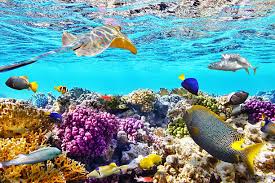
Today, our group will experience one of Belize’s greatest treasures, the Hol Chan Marine Reserve, part of the UNESCO-listed Belize Barrier Reef, the second-largest reef system in the world. This protected marine park is teeming with life: you’ll swim alongside parrotfish, angelfish, butterflyfish, and blue tangs, as well as moray eels, sea turtles, and spotted eagle rays gliding gracefully through the water. Keep an eye out for nurse sharks and groupers hiding among the coral formations. Continue to Shark Ray Alley, where you can safely snorkel with gentle nurse sharks and southern stingrays, and then to Coral Gardens, known for its colorful corals and schools of shimmering fish. Return to Caye
Caulker in the afternoon to enjoy island time and a fresh seafood farewell dinner and a view of the Caribbean sunset.
Day 8: Farewell Belize & Guatemala!
Bid farewell to this beautiful country as you take the water taxi from Caye Caulker back to Belize City. Upon arrival at the mainland the driver will take you to the airport for your departure flight. We’re so happy you chose to explore this region of the world with us and we hope you had an unforgettable trip! Don’t be a stranger and come back to visit us again soon!
UNITED NATIONS SUSTAINABLE DEVELOPMENT GOALS

Goal 4: Quality Education
Students engage in immersive, experiential learning by exploring Mayan archaeology, conservation projects, and living communities in Belize and Guatemala. Hands-on encounters at sites like Tikal, Uaxactún, and conservation centers deepen historical, environmental, and cultural understanding beyond the classroom.

Goal 8: Decent Work & Economic Growth
The program highlights sustainable livelihoods through community-based tourism, eco-lodges, local markets, and traditional practices such as chicle harvesting in Uaxactún. Students examine how tourism and heritage preservation can generate income while supporting local employment and
cultural integrity.

GOAL 11: Sustainable cities & Communities
Visits to ancient and modern Maya settlements illustrate how communities adapt to environmental and social change over time. Students learn how heritage conservation, land management, and tourism planning contribute to the
resilience of both historic sites and present-day communities.

Goal 12: Responsible consumption & Production
Through eco-tourism experiences and conservation-focused activities, students analyze the environmental impact of travel and resource use. The itinerary emphasizes responsible tourism practices that minimize ecological footprints
while supporting local producers and conservation initiatives

Goal 13: Climate ACtion
Exploration of rainforest ecosystems and marine environments allows students to see firsthand how climate change threatens biodiversity and cultural heritage. Conservation efforts at Tikal, the Green Iguana Conservation Project, and the Belize Barrier Reef demonstrate adaptive strategies to protect vulnerable ecosystems.

Goal 14: LIFE below water
Snorkeling at Hol Chan Marine Reserve and the Belize Barrier Reef introduces students to marine conservation, coral reef protection, and sustainable fisheries management. These experiences underscore the importance of protecting ocean ecosystems that support food security and tourism livelihoods.

Goal 15: Life on land
Rainforest exploration in Tikal National Park and community conservation efforts in Uaxactún highlight biodiversity protection, sustainable forestry, and wildlife preservation. Students learn how land-based ecosystems are managed to balance environmental health with human needs.
EDUCATIONAL AND CULTURAL CONNECTIONS
- Agriculture – Students learn about agriculture through direct exposure to traditional and sustainable land-use practices rooted in Maya culture. In Uaxactún, they see
how forest-based livelihoods—such as chicle (natural gum) harvesting—support local economies while maintaining ecological balance. These experiences highlight the relationship between food systems, labor, and long-term
sustainability in rural communities. - Conservation – Conservation is a core theme woven throughout the program, from rainforest protection in Tikal National Park to species rehabilitation at the Green Iguana
Conservation Project. Students examine how conservation efforts intersect with community livelihoods, tourism, and government policy. The program concludes with marine conservation at the Belize Barrier Reef, demonstrating how
protected ecosystems require both scientific management and public stewardship. - Hospitality & Tourism – Students experience tourism as both guests and critical observers, analyzing how hospitality supports local economies in San Ignacio, eco-lodges in Guatemala, and the island community of Caye Caulker. They engage with different tourism models—eco-tourism, community-based tourism, and marine tourism—and assess their social, cultural, and environmental impacts. This encourages students to think about tourism as a development strategy with both benefits and responsibilities.
- World History – World history comes alive as students explore major Maya sites such as Xunantunich, Tikal, and Uaxactún, connecting architecture, astronomy, and urban planning to broader themes of civilization and power. Lidar research at Tikal deepens understanding of how advanced societies adapted to their environments long before modern technology. By crossing contemporary borders, students also examine how colonial legacies and modern nation-states shape the interpretation and preservation of the past.
EARN COLLEGE CREDIT
- Transferable college credit in Global Studies
- Available to high school juniors, seniors, and current college students
- Community members may audit the course
- Based on Harvard Global Citizenship curriculum
- National Geographic Certified Educator
PHYSICAL DIFFICULTY RATING SCALE
VERY EASY
Ideal for: All travelers, including those with limited mobility or no physical conditioning.
- Activities: Short walks on flat terrain; frequent rest stops.
- Terrain: Paved roads, accessible buildings, minimal stairs.
- Typical Duration: Activities lasting under one (1) hour.
- Examples: Museum visits, cultural tours, light sight-seeing by vehicle.
- Accesssibility: Wheelchair accessible or close to it.
EASY
Ideal for: Travelers with a basic level of fitness
- Activities: Light walking, some stairs, standing for periods.
- Terrain: Mostly flat or gently sloped; occasional uneven surfaces.
- Typical Duration: Activities lasting one to two (1-2) hours.
- Examples: Guided walking tours, village visits, short nature walks.
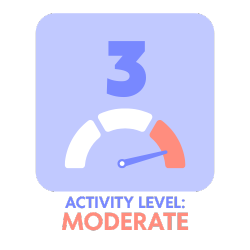
MODERATE
Ideal for: Travelers in good health and physically active.
- Activities: Daily walking or hiking, biking, light manual labor.
- Terrain: Uneven or hilly paths, moderate elevation gain.
- Typical Duration: Activities lasting two to four (2-4) hours.
- Examples: Service projects, community-based treks, conservation work.