
Why Community-Led Nutrition and Health Programs Matter
By Stacie Freeman, MSSW
When I say the world is our classroom, I don’t mean travel for travel’s sake. I mean immersive, community-led learning that addresses real needs – especially hunger, nutrition, and health inequities that shape a child’s entire future.
Guatemala makes that clear.
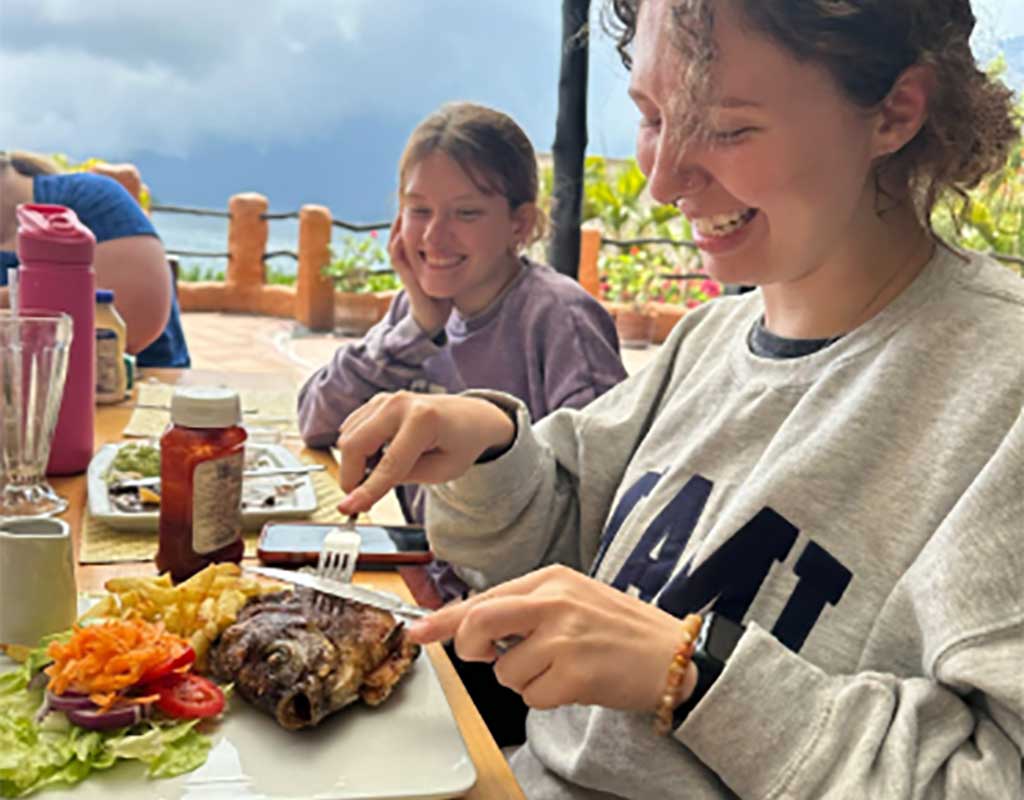
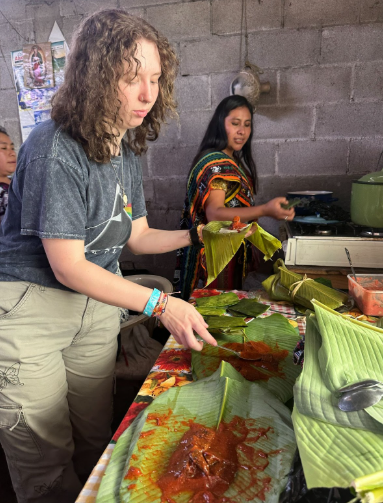
The country’s beauty is overwhelming, but what stays with students long after they return home is the people. One of my Bethel University sociology majors, Raanan Sellers, spoke often about how meaningful it was to build relationships – especially with Imelda, the cook at our accommodations. That relationship reinforced a lesson central to sociology and to effective community work: dignity, connection, and shared humanity are the foundation of lasting change.
During our program, students partnered with local professionals on school-based health initiatives. At a rural elementary school, they supported fluoride treatments and taught basic dental hygiene – simple interventions with outsized importance in communities where access to dental care is limited and prohibitively expensive. Students rotated through classrooms demonstrating brushing and flossing techniques, distributing toothbrushes and toothpaste, and working alongside local partners who understand the community’s needs far better than any outsider ever could.
What mattered most was not the activity itself, but the context.
Students learned that chronic health challenges, like poor dental outcomes, are rarely about individual choices alone. They are rooted in food insecurity, limited healthcare access, and structural inequality. A single fluoride treatment won’t solve those problems. But removing barriers does matter. Education matters. Ensuring families have basic resources matters. And thinking beyond one-time interventions toward sustained, community-driven solutions matters most of all.
That same day, students also led age-appropriate English lessons with kindergarteners. In a country where many people speak multiple languages and tourism is a major economic driver, even an early introduction to English can create future opportunities. It was a powerful example of how health, education, and economic resilience are deeply interconnected.
This is where sociology becomes action.
By the end of the program, Raanan reflected on how the experience reshaped her understanding of community work. She has long dreamed of opening a soup kitchen in her hometown, but this experience strengthened her resolve and clarified her vision. She saw firsthand that meaningful change almost always begins locally – with consistent, relationship-based efforts that support families before crises become emergencies.
Our partnership with Konojel exemplifies that model. Konojel focuses on food security and nutrition for pregnant women and young children – precisely the populations where early intervention has the greatest long-term impact. Their work recognizes a simple but powerful truth: when mothers are nourished and children are healthy, entire communities are stronger.
For students, witnessing Konojel’s approach reframes how they think about hunger. Food insecurity is not an abstract issue or a distant statistic – it is a daily reality that affects health, learning, and opportunity from the very beginning of life. Supporting maternal and child nutrition is not just compassionate; it is strategic, preventative, and transformative.
On a personal level, Raanan returned home more intentional about how she uses her time and energy. She felt a sense of purpose in Guatemala – working alongside others, contributing to something tangible – that she now strives to carry into her life at home. That shift matters. It’s how future community leaders are formed.
This is why programs like ours exist.
Guatemala didn’t just teach my students about global inequality. It showed them what effective solutions look like: locally led, culturally grounded, and focused on nutrition, health, and dignity. It reminded them – and me – that addressing hunger and improving nutrition isn’t about short-term fixes, but about sustained investment in families and communities.
That is the lesson the world teaches best.
And it’s why I believe so deeply that when we invest in community-based nutrition and health programs, especially those serving mothers and children, we are not just meeting immediate needs. We are shaping healthier, more resilient futures.
Raanan Sellers - Bethel University Student - Sociology Major - Troy, TN
Guatemala 2024 - Bethel University Fall Break
Raanan’s original quote – “The Bethel global studies trip I embarked upon was to Guatemala. Guatemala has such beautiful scenery, and that helped remind me to just stop and take in the view here at home too. I loved being able to interact with the people we met. Meeting Imelda (the cook at our accommodations) was the highlight of our trip in my eyes. No matter where you travel, we’re never all that different.
One of the service projects we worked on was a trip to a school to give fluoride treatments and show proper dental hygiene. We partnered with a dental hygienist in the area to help provide this and do the grunt work of it. I was in the group that went classroom to classroom with a flossing and brushing demonstration. The other group was working on preparing dental trays of fluoride for the children and giving out toothbrushes and floss. After the fluoride treatments were done, we split into groups for each classroom and held an English lesson. My group was with the kindergarteners. We pointed around the room at different items/images. We asked for the names of the items/images in Spanish then told them how to say it in English. Dental health is not too good in Guatemala. We were told that many have sugary diets, and seeing a proper dentist can get very expensive very quick. In the grand scheme of things, a single fluoride treatment won’t protect from losing teeth. Providing the toothbrushes, toothpaste, and other dental supplies will definitely take out the variable of the children not having the resources to get a toothbrush. If the program continues though, it could help to promote dental hygiene for the children. The English lessons I think could have a longer lasting effect. Most Guatemalans speak more than one language, and since tourism is such a big economic stimulator, English is a very useful language to learn. I think having a tidbit of English or even an introduction to the language is a practical investment.
This trip solidified my view that community work is important. One day, I’d like to start a soup kitchen in my town. This has always been a dream of mine, but having this kind of experience strengthens my resolve. I think change usually starts at the local level, and giving back to the community is a great place to start. Doing something like what Konojel does, focusing on food security for pregnant women and young children, is definitely something I’ll implement whenever I fulfill this goal. On a smaller level, this trip encouraged me to be more mindful of how I spend my time at home. I felt so productive in Guatemala after all the volunteer work and exploration we did, and I’d love to implement that even more so into my life now.
To conclude, the trip to Guatemala was a wonderful experience and I feel like my eyes are opened to much more than before. This trip encouraged me to be a more active member of my community and to see the world through a different lens.”